
- Safety
- 5
- of 5 stars
- Recalls
- 4
- on record
- MPG
- 32
- combined
Open recalls on record
4 safety recalls. Recall repairs are free at any franchised dealer — check the VIN before you buy.
Vehicle Summary
2017 Honda Pilot
Before You Buy
Safety record at a glance
- Recall campaigns
- 4
- Owner complaints
- 929
- Complaints citing a crash
- 9
These are raw counts from NHTSA records. They are not normalized by how many of these vehicles are on the road, so a model that sold in large numbers will tend to show more of everything. We do not publish a composite safety or reliability score.
4 Recalls on Record
These recalls have been issued by the manufacturer. Contact any authorized dealer to verify they have been completed — repairs are free.
Safety recalls
4 NHTSA campaigns affecting this model year.
- 21V932000high
Body/structure issue
STRUCTURE:BODY:HOOD
Honda (American Honda Motor Co.) is recalling certain 2019 Passport, 2016-2019 Pilot, and 2017-2020 Ridgeline vehicles. The hood latch striker may become damaged and separate from the hood, which can result in the hood opening while driving.
Consequence
A hood that opens while driving can obstruct the driver's view and increase the risk of a crash.
Full campaign recordRemedy
Dealers will either repair the hood latch striker, or replace the hood if necessary, free of charge. Owner notification letters were mailed January 18, 2022. Owners may contact Honda customer service at 1-888-234-2138. Honda's number for this recall is PBV.
- 23V858000high
Fuel pump may fail
FUEL SYSTEM, GASOLINE:DELIVERY:FUEL PUMP
Honda (American Honda Motor Co.) is recalling certain 2013-2023 Honda Accord, Civic Coupe, Civic Sedan, Civic Hatchback, Civic Type R, CR-V, HR-V, Ridgeline, Odyssey, Acura ILX, MDX, MDX Hybrid, RDX, RLX, TLX, 2019-2022 Honda Insight, Passport, 2020 Honda CR-V Hybrid, 2018-2019 Honda Clarity PHEV, Fit, and 2015-2020 Honda Accord Hybrid, Pilot, Acura NSX vehicles. The fuel pump inside the fuel tank may fail.
Consequence
Fuel pump failure can cause an engine stall while driving, increasing the risk of a crash.
Full campaign recordRemedy
Dealers will replace the fuel pump module, free of charge. Owner letters were mailed September 6, 2024. Owners may contact Honda customer service at 1-888-234-2138. Honda's numbers for this recall are KGC and KGD. This recall is an expansion of NHTSA recall numbers 21V-215 and 20V-314.
- 26V332000high
Airbag system issue
AIR BAGS:SENSOR:OCCUPANT CLASSIFICATION:FRONT PASSENGER
Honda (American Honda Motor Co.) is recalling certain 2018-2021, 2023 Acura TLX, 2019-2024 RDX, 2017-2020, 2022-2026 MDX, 2017-2021, 2023, 2025 Honda Ridgeline, 2017-2022 Pilot, 2019-2021 Passport, 2018-2026 Odyssey, 2019-2022 Insight, 2019-2021 HR-V, 2018-2020 Fit, 2020-2022 CR-V Hybrid, 2017-2022 CR-V, 2017-2018, 2021 Civic Type R, 2017-2021 Civic hatchback, 2016-2020 Civic coupe, 2016-2022 Civic, 2017-2022 Accord Hybrid, and 2016-2022 Accord vehicles. The front passenger seat weight sensor may crack and short circuit, which can cause the air bags to deploy unintentionally during a crash.
Consequence
Air bags that deploy unintentionally during a crash increase the risk of injury.
Full campaign recordRemedy
Dealers will replace the seat weight sensors, free of charge. Owner notification letters were mailed July 7, 2026. Owners may contact Honda's customer service at 1-888-234-2138. Honda's numbers for this recall are BOL, WO9, OOA, WOM, XOH, NOC, POD, BOE, UOF, POB, EOG, AOI, QO8, TOJ, DO7, and SOK. This recall expands previous NHTSA recall number 24V064. Vehicle Identification Numbers (VINs) involved in this recall will be searchable on NHTSA.gov beginning May 29, 2026.
- 26V365000high
Body/structure issue
STRUCTURE:FRAME AND MEMBERS
American Honda Motor Company (Honda) is recalling certain 2016-2022 Honda Pilot, 2017-2023 Ridgeline, 2019-2023 Passport, and 2014-2020 Acura MDX vehicles that were sold in Connecticut, Delaware, District of Columbia, Illinois, Indiana, Iowa, Kentucky, Maine, Maryland, Massachusetts, Michigan, Minnesota, Missouri, New Hampshire, New Jersey, New York, Ohio, Pennsylvania, Rhode Island, Vermont, Virginia, West Virginia, or Wisconsin. The rear subframe may corrode at the suspension mounting points, which can result in rear suspension component failure.
Consequence
Failure of rear suspension components, such as the rear control arm, can cause a loss of vehicle handling and control, increasing the risk of a crash or injury.
Full campaign recordRemedy
Dealers will inspect the rear subframe and install a rear subframe reinforcement kit and, as necessary, repair or replace the rear subframe components, free of charge. Interim letters notifying owners of the safety risk were mailed July 27, 2026. Additional letters will be sent once the final remedy is available, anticipated in the fall of 2026. Owners may contact Honda's customer service at 1-888-234-2138. Honda's numbers for this recall are AOU and AOT. Vehicle Identification Numbers (VINs) involved in this recall will become searchable on NHTSA.gov beginning June 10, 2026.
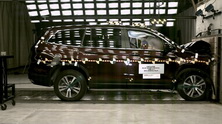
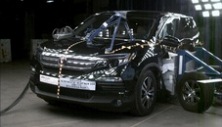
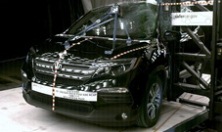
NHTSA crash-test ratings
NCAP star ratings and the underlying test breakdown for the 2017 Honda Pilot.
Frontal crash
- Driver
- 5 / 5
- Passenger
- 4 / 5
Side crash
- Driver
- 5 / 5
- Passenger
- 5 / 5
- Side pole
- 5 / 5
Rollover
- Rollover risk
- 16.4%
- Dynamic tip
- No Tip
Driver-assistance technologies
- Electronic stability control
- Standard
- Forward collision warning
- Optional
- Lane departure warning
- Optional
What the ratings mean
NHTSA gives the 2017 Honda Pilot 5 out of 5 stars overall. NHTSA does not publish enough comparable results for this class and year to rank it against peers.
NHTSA published results for every NCAP test in this program, so the overall star rating rests on a complete set of crash and rollover results.
NHTSA's dynamic test put this vehicle's rollover probability at 16.4% in a single-vehicle crash — the figure behind the rollover star rating, published here because the star alone hides how wide each band is.
Fuel economy & emissions
EPA figures for the 2017 Honda Pilot, with tailpipe CO₂ and class context.
27
City
39
Hwy
32
Comb
- Annual fuel cost
- $1,641
- Tailpipe CO₂
- 278 g/mi
How this compares
The EPA holds too few vehicles in this class and model year to rank the 2017 Honda Pilot against its peers.
Tailpipe CO₂ is 278 grams per mile — about 4.2 metric tons over 15,000 miles of driving.
Consumer complaints
929 owner reports filed with NHTSA.
- 929
- Total
- 9
- Crashes
- 5
- Fires
- 6
- Injuries
Most reported components
- ENGINE565
- ELECTRICAL106
- OTHER84
- FUEL SYSTEM79
- BRAKES27
Notable Issues
929 consumer complaints filed with NHTSA. 6 reports involve injuries. 9 reports involve a crash.
Most reported problems
Safety timeline
Every dated recall and NHTSA investigation for the 2017 Honda Pilot, newest first.
- Recall
Failure of rear suspension components, such as the rear control arm, can cause a loss of vehicle handling and control, increasing the risk of a crash or injury.
- Recall
Air bags that deploy unintentionally during a crash increase the risk of injury.
- Investigation opened
NHTSA opened investigation PE25008
Engine failure
- Investigation closed
NHTSA closed investigation RQ24013
Engine failure
- Investigation opened
NHTSA opened investigation EA25004
No Restart After Auto Start/Stop Engages
- Investigation closed
NHTSA closed investigation PE22005
No Restart After Auto Start/Stop Engages
- Investigation opened
NHTSA opened investigation RQ24013
Engine failure
- Recall
Fuel pump failure can cause an engine stall while driving, increasing the risk of a crash.
- Investigation opened
NHTSA opened investigation PE22005
No Restart After Auto Start/Stop Engages
- Recall
A hood that opens while driving can obstruct the driver's view and increase the risk of a crash.
Dates are the NHTSA report-received date for recalls and the ODI open/close date for investigations. Crash-test ratings are not shown here because the source does not provide a reliable publication date for them.
Specifications & ratings
Specifications
- Body class
- Sedan
- Drive type
- FWD
- Engine
- 2.5L 4-cyl
- Fuel type
- Regular Gasoline
- Transmission
- Automatic
- Seats
- 5
Fuel economy
27
City
39
Hwy
32
Comb
- Annual cost
- $1,641
- Fuel
- Regular Gasoline
NHTSA crash ratings
- Overall
- Frontal
- Side
- Rollover
Explore related
Compare with
Systems recalled
Safety timeline
Full timeline- Recall
Failure of rear suspension components, such as the rear control arm, can cause a loss of vehicle handling and control, increasing the risk of a crash or injury.
- Recall
Air bags that deploy unintentionally during a crash increase the risk of injury.
- Investigation opened
NHTSA opened investigation PE25008
Engine failure
- Investigation closed
NHTSA closed investigation RQ24013
Engine failure
- Investigation opened
NHTSA opened investigation EA25004
No Restart After Auto Start/Stop Engages