
- Safety
- 5
- of 5 stars
- Recalls
- 2
- on record
- MPG
- 24
- combined
Open recalls on record
2 safety recalls. Recall repairs are free at any franchised dealer — check the VIN before you buy.
Vehicle Summary
2015 Toyota Avalon
Before You Buy
Safety record at a glance
- Recall campaigns
- 2
- Owner complaints
- 53
- Complaints citing a crash
- 8
These are raw counts from NHTSA records. They are not normalized by how many of these vehicles are on the road, so a model that sold in large numbers will tend to show more of everything. We do not publish a composite safety or reliability score.
2 Recalls on Record
These recalls have been issued by the manufacturer. Contact any authorized dealer to verify they have been completed — repairs are free.
Safety recalls
2 NHTSA campaigns affecting this model year.
- 15V728000high
Forward collision avoidance · crash imminent braking
FORWARD COLLISION AVOIDANCE: CRASH IMMINENT BRAKING
Toyota Motor Engineering & Manufacturing (Toyota) is recalling certain model year 2013-2015 Avalon and Avalon Hybrid vehicles manufactured October 19, 2012 to October 27, 2015 and 2013-2015 Lexus ES350 and ES300h vehicles manufactured June 18, 2012 to July 6, 2015. The affected vehicles are equipped with a Pre-Collision System (PCS) as optional equipment. In these vehicles, the PCS may unexpectedly activate and apply the brakes when the radar detects a steel joint or plate in the roadway as an object.
Consequence
A vehicle that unexpectedly brakes increases the risk of a crash.
Full campaign recordRemedy
Toyota will notify owners, and dealers will replace certain PCS components, free of charge. The recall began on July 28, 2016. Owners may contact Toyota at 1-888-270-9371. Toyota's numbers for this campaign are F1V and F2E.
- 20V024000high
Airbag system issue
AIR BAGS: AIR BAG/RESTRAINT CONTROL MODULE
Toyota Motor Engineering & Manufacturing (Toyota) is recalling certain 2011-2019 Corolla, 2011-2013 Matrix, 2012-2018 Avalon, and 2013-2018 Avalon Hybrid vehicles. During certain crashes, the air bag electronic control unit (ECU) may malfunction, possibly disabling the deployment of the air bags and/or seat belt pretensioners.
Consequence
In the event of a crash, air bags and/or seat belt pretensioners that do not deploy as intended may increase the risk of injury.
Full campaign recordRemedy
Toyota will notify owners, and dealers will inspect the ECU and install a noise filter between the air bag control module and its wire harness, as necessary, free of charge. Owners were notified of the safety risk beginning March 2, 2020. A second letter notifying owners of the remedy repair will be mailed between March 16, 2020 and June 27, 2020. Owners may contact Toyota customer service at 1-888-270-9371. Toyota's numbers for this recall are 20TB03, 20TA03 and 20TA05.
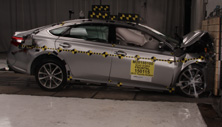
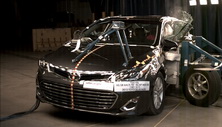
NHTSA crash-test ratings
NCAP star ratings and the underlying test breakdown for the 2015 Toyota Avalon.
Frontal crash
- Driver
- 4 / 5
- Passenger
- 4 / 5
Side crash
- Driver
- 5 / 5
- Passenger
- 5 / 5
- Side pole
- 4 / 5
Rollover
- Rollover risk
- 10.7%
- Dynamic tip
- No Tip
Driver-assistance technologies
- Electronic stability control
- Standard
- Forward collision warning
- Optional
- Lane departure warning
- No
What the ratings mean
NHTSA gives the 2015 Toyota Avalon 5 out of 5 stars overall, level with the 5-star median for the 21 comparable 2015 vehicles NHTSA rated in this class.
NHTSA published results for every NCAP test in this program, so the overall star rating rests on a complete set of crash and rollover results.
NHTSA's dynamic test put this vehicle's rollover probability at 10.7% in a single-vehicle crash — the figure behind the rollover star rating, published here because the star alone hides how wide each band is.
Fuel economy & emissions
EPA figures for the 2015 Toyota Avalon, with tailpipe CO₂ and class context.
21
City
30
Hwy
24
Comb
- Annual fuel cost
- $2,800
- Tailpipe CO₂
- 365 g/mi
How this compares
At 24 MPG combined, the 2015 Toyota Avalon ranks 12th of 23 midsize cars EPA rated for 2015 — exactly the 24 MPG median for that group.
That places it a little below the middle of its class. If annual mileage is high, the running-cost gap against a class-average rival compounds quickly.
EPA puts annual fuel spend at about $2,800, $100 more than the $2,700 typical for the class. Over five years at 15,000 miles a year that is roughly $14,000, a $500 difference against a class-median vehicle.
Tailpipe CO₂ is 365 grams per mile — about 5.5 metric tons over 15,000 miles of driving.
Consumer complaints
53 owner reports filed with NHTSA.
- 53
- Total
- 8
- Crashes
- 0
- Fires
- 3
- Injuries
Most reported components
- BRAKES13
- OTHER13
- AIR BAGS8
- ELECTRICAL5
- ENGINE4
Notable Issues
53 consumer complaints filed with NHTSA. 3 reports involve injuries. 8 reports involve a crash.
Most reported problems
Safety timeline
Every dated recall and NHTSA investigation for the 2015 Toyota Avalon, newest first.
- Investigation closed
NHTSA closed investigation EA19001
Electrical overstress
- Recall
In the event of a crash, air bags and/or seat belt pretensioners that do not deploy as intended may increase the risk of injury.
- Investigation opened
NHTSA opened investigation EA19001
Electrical overstress
- Recall
A vehicle that unexpectedly brakes increases the risk of a crash.
Dates are the NHTSA report-received date for recalls and the ODI open/close date for investigations. Crash-test ratings are not shown here because the source does not provide a reliable publication date for them.
Specifications & ratings
Specifications
- Body class
- Midsize Cars
- Drive type
- Front-Wheel Drive
- Engine
- 3.5L 6-cyl
- Fuel type
- Unknown
- Transmission
- Automatic (S6)
- Seats
- 0
Fuel economy
21
City
30
Hwy
24
Comb
- Annual cost
- $2,800
- Fuel
- Regular Gasoline
NHTSA crash ratings
- Overall
- Frontal
- Side
- Rollover
Explore related
Systems recalled
Safety timeline
Full timeline- Investigation closed
NHTSA closed investigation EA19001
Electrical overstress
- Recall
In the event of a crash, air bags and/or seat belt pretensioners that do not deploy as intended may increase the risk of injury.
- Investigation opened
NHTSA opened investigation EA19001
Electrical overstress
- Recall
A vehicle that unexpectedly brakes increases the risk of a crash.